Be the Glitch. Imperfection Is the Only Luxury Left.
We are living in the age of the "Great Averaging."
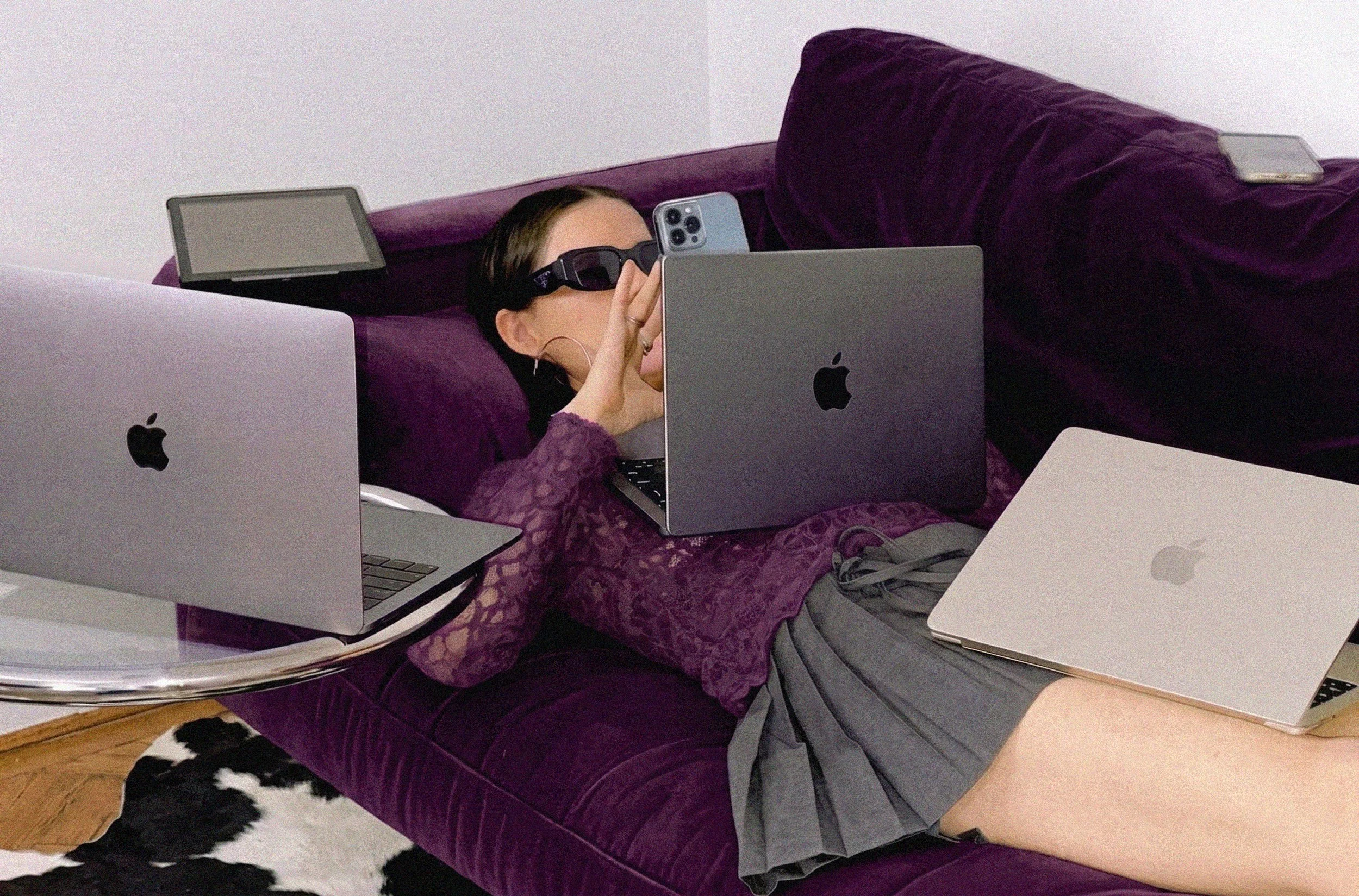
Open your phone. Scroll through your feed. Do you notice it? The faces are starting to look the same (poreless, symmetrical, racially ambiguous). The writing sounds the same (confident, structured, slightly robotic). The interior design, the branding, the career advice—it is all drifting toward a perfectly optimized center.
This isn't an accident. It is the mathematical inevitability of the Algorithm.
Generative AI models are trained on the average of everything humanity has ever created. When asked to create, they predict the most likely next pixel or the most statistically probable next word. They push us toward the median. They smooth out the edges. They fix the "errors."
But in a world where "perfect" can be generated in seconds for free, perfection is no longer valuable. It is a commodity.
To be your own muse in 2025 is no longer just a creative exercise; it is an act of rebellion. It is a refusal to be optimized. It is the understanding that your quirks, your scars, and your unpolished thoughts are not bugs to be fixed—they are the only luxury left.
The Trap of Algorithmic Sameness
We used to look at art to get inspired. Now, we look at metrics. We have outsourced our taste to the Explore page.
This creates a feedback loop of homogenization. We see what performs well (the "Instagram Face," the "LinkedIn Voice"), and we subconsciously mimic it to get the same dopamine hit of validation. We sand down our edges to fit the mold. We become curators of other people's lives rather than creators of our own.
The danger is that we are training ourselves to think like machines. We are prioritizing efficiency over eccentricity. We are asking, "Will this rank?" instead of "Is this true?"
The New Rule: Stop optimizing yourself for an algorithm that doesn't care about you. The algorithm wants engagement; you want a legacy. Those are two very different goals.
The "Human" Signal is the Glitch
If AI is the average, then humanity is the anomaly.
To a machine, your unique lived experience looks like "bad data." It’s messy. It’s inconsistent. It doesn't fit the pattern.
AI can generate a "perfect" love letter. It cannot generate the specific memory of how your hands shook the first time you met your partner.
AI can write a business strategy. It cannot replicate the gut instinct you honed after a specific, painful failure three years ago.
These "glitches"—the specific, non-scalable, inefficient parts of your life—are your IP. They are the only things that cannot be hallucinated by a server farm.
The New Rule: Double down on what makes you weird. If your interests don't make sense together, good. If your career path looks like a squiggle map, excellent. That complexity is your competitive advantage. It creates a "Human Signal" that cuts through the noise of AI-generated slop.
How to Source Your Own Muse
So, how do you stop copying and start channeling yourself? You have to change your inputs.
You cannot hear your own inner voice if you are constantly plugged into the hive mind. You have to stop consuming and start mining.
The Taste Detox: Challenge yourself to a week of "analog inspiration." Do not look at Pinterest, Instagram, or TikTok for creative ideas. Look at your own journals. Look at nature. Listen to eavesdropped conversations in a café. Force your brain to make connections without the crutch of an algorithm.
Mine Your History: Instead of asking "What is trending?", ask "What have I survived?" Your scars are a source of wisdom that no AI can access. Your specific childhood memories, your unique cultural background, your weirdest hobbies—this is your source material.
Publish the Draft: The impulse to polish everything until it shines is a fear response. Resist it. Share the thought before it’s perfect. Wear the outfit that clashes. Write the sentence that is grammatically questionable but emotionally resonant.
Be the Anomaly
The future belongs to the jagged, the textured, and the real. As the world gets smoother and more artificial, the hunger for the "glitch"—for the undeniable proof of a human hand and a human heart—will only grow.
Don't try to fix yourself. Your imperfections are the only things that prove you were actually here.
Frequently Asked Questions
What does "being your own muse" mean in the age of AI? It means sourcing inspiration from your own lived experiences, history, and unique perspective rather than relying on algorithmic feeds or AI-generated trends. It is about prioritizing internal authenticity over external validation.
Why does AI lead to homogenization? AI models are trained on vast datasets to predict the most statistically probable outcome. This inherently favors the "average" or the "median," smoothing out unique outliers and leading to a sameness in style, writing, and visuals.
How can I protect my creativity from AI? Focus on "context" over "content." AI can create content, but it lacks the context of your specific biography, emotions, and physical experiences. Doubling down on your personal story and "inefficient" human traits is your best defense.
MORE FROM OUR BLOg: