
Why Your Zip Code Matters More Than Your Rebrand
There is a persistent and exhausting myth in the creative world. We are told that if we are not succeeding, we need to change who we are. We are told to pivot our brand, fix our style, or follow the latest trend just to blend in.
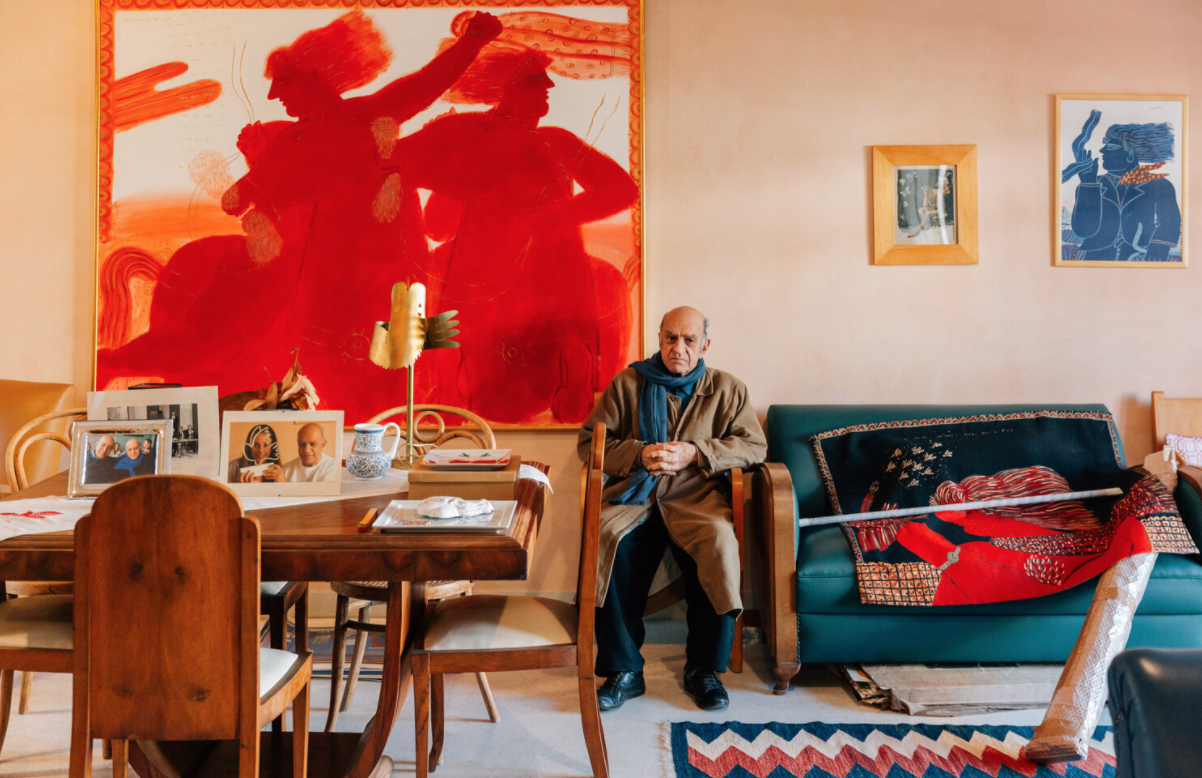
Alekos Fassianos was the living refutation of that advice.
Fassianos did not become one of the most celebrated artists of the 20th century by changing his DNA. He did not become a Parisian abstractionist to fit in with the "cool kids" of the 1960s. He became a legend because he realized that sometimes you do not need to change your art. You just need to change your room.
The Geographic Breakthrough
In 1960, Fassianos moved from the Beaux-Arts school in Athens to Paris. He was escaping a stifling political climate in Greece that lacked the infrastructure to support his vision. When he arrived in Paris, he was surrounded by giants. The air was thick with the influence of Picasso and Matisse.
It would have been easy to dilute his "Greekness" to fit the European mold. Instead, he doubled down. He famously said that he did not come to Paris to change, but rather to bring Greece with him.
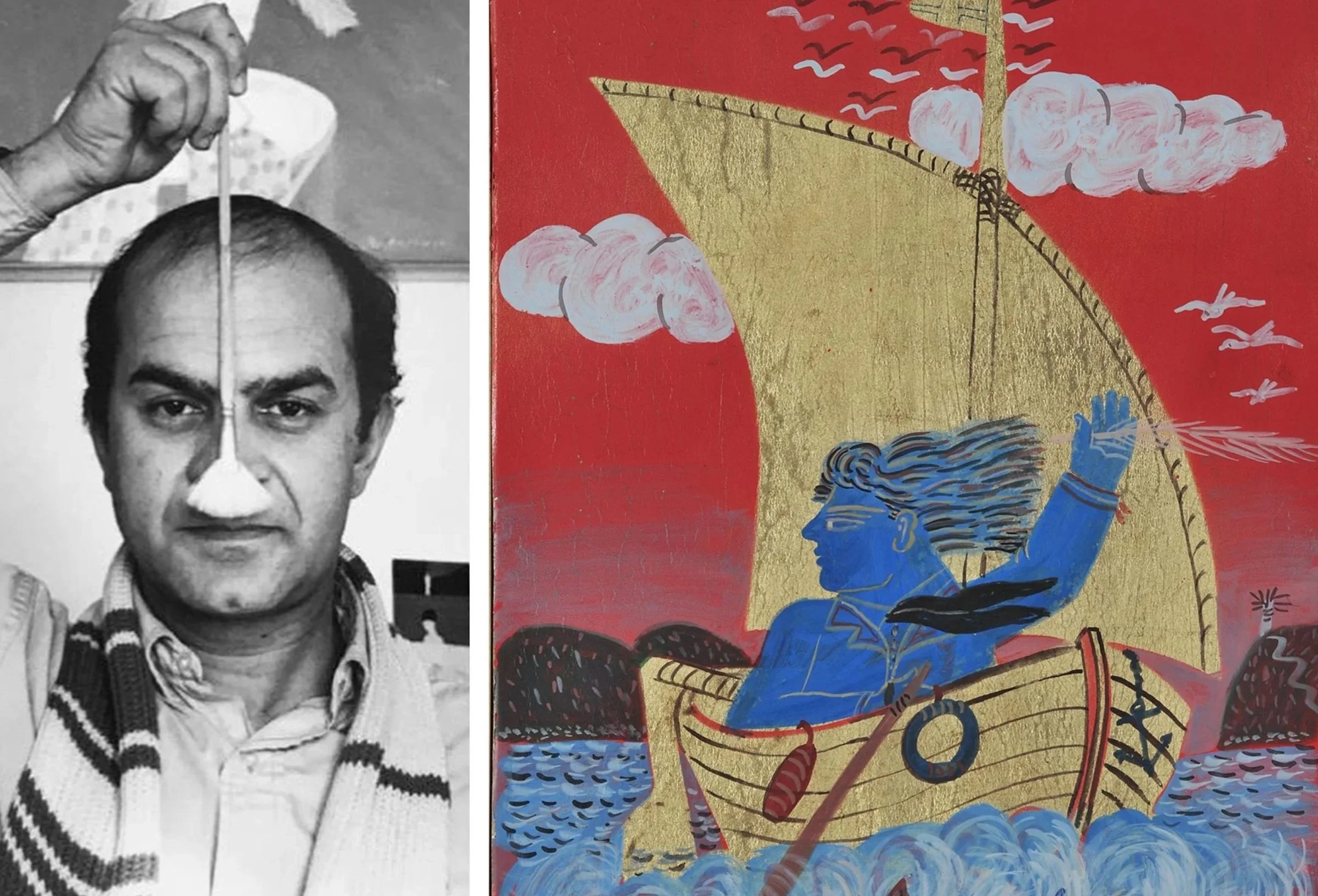
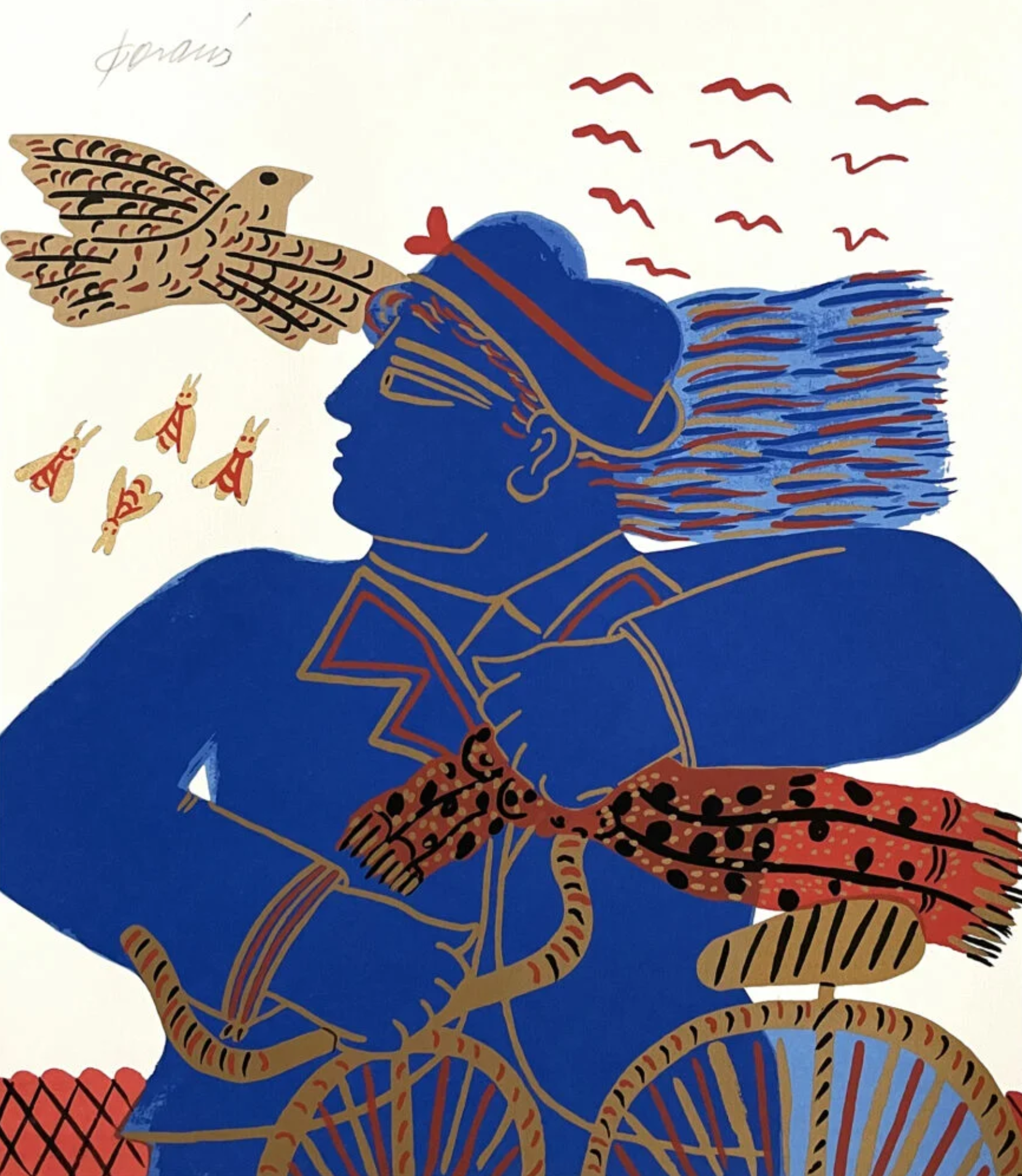
He realized that his local perspective was his greatest asset. The flat silhouettes of ancient pottery and the vibrant blues of the Aegean were not limitations. They were his edge. He just needed a stage large enough to hold them.
The Facchetti Hinge
Every breakthrough has a specific moment where the door swings open. For Fassianos, that year was 1966. By moving his environment, he put himself in the path of legendary art dealer Paul Facchetti.
Facchetti was not looking for another French painter. He was looking for a fresh, authentic voice. He discovered Fassianos and immediately placed him in an exhibition alongside icons like Jean Paul Riopelle. This was the exact moment Fassianos went global.
By changing his environment, he gained access to a new caliber of friends, mentors, and connections. He did not fix his work. He fixed his audience. Paris provided the stage that allowed a local boy from Athens to talk to the whole world.
The Strategy of the New Room
Alekos Fassianos’ 1966 pivot is a masterclass in environmental design. If you feel stuck or unseen, the answer might not be more work. It might be a new city.
The Friendship Shift. Fassianos stopped being the student in Athens and became a contemporary in Paris.
The Connection Hack. He moved into the lithography studios where the best in the world were working. This made a discovery by someone like Facchetti a statistical probability rather than just luck.
The Radical Locality. He proved that the more specific you are to your roots, the more universal you become. You do not become global by being generic. You become global by being so uniquely yourself that the world has to travel to find you.
Stop Fixing Your Art and Start Fixing Your Environment
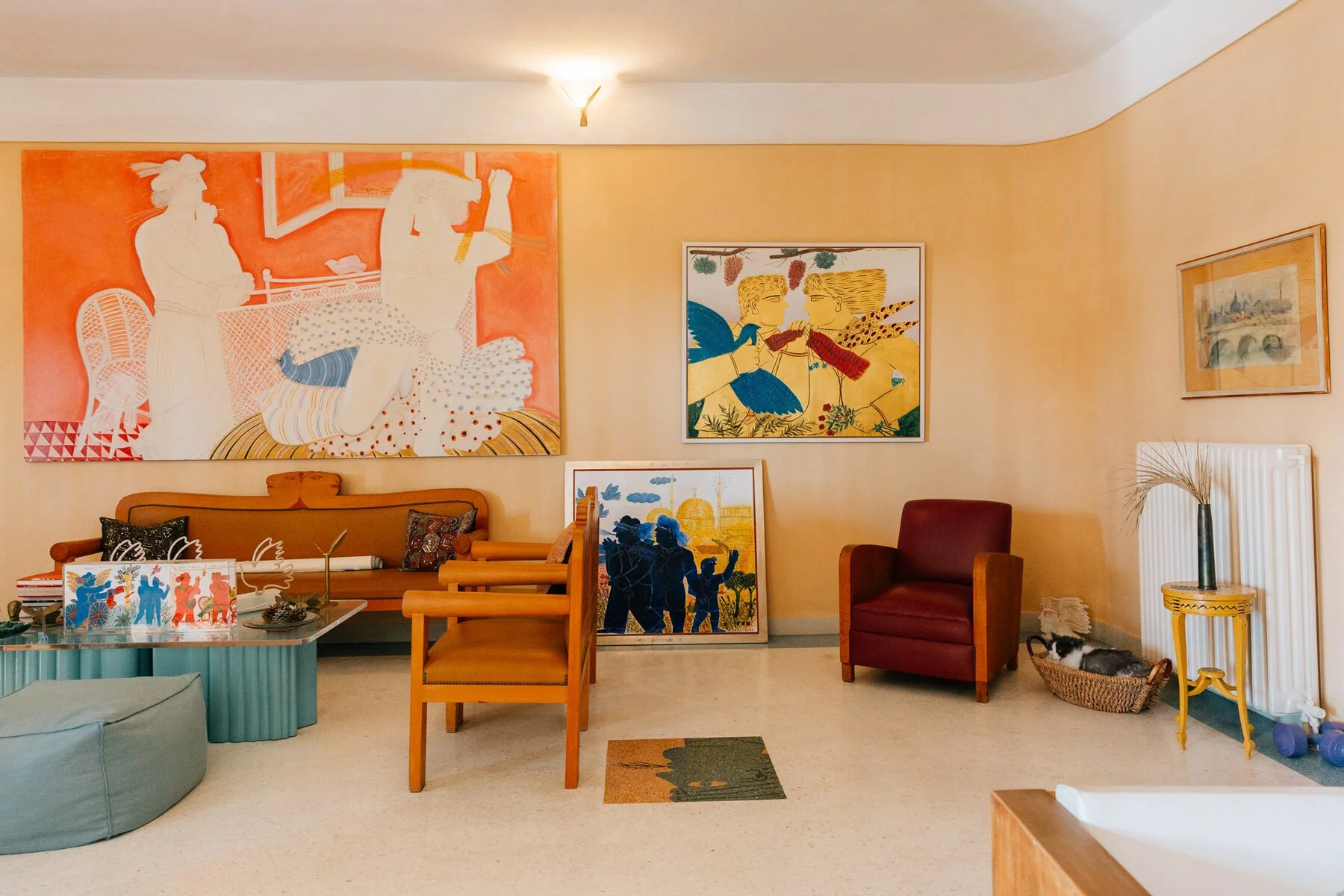
Fassianos ended his life as a complete artist. He painted, illustrated, and even designed the door handles of his own home. He was a man who lived entirely on his own terms.
He is proof that a breakthrough does not require a personality transplant. It requires the courage to pack your bags and find a new city. Trust that the local voice inside you is exactly what the global stage is waiting to hear.
Double-click to edit...
