The Anti-Strategy Strategy: How GANNI Rewrote the Rules of Fashion
The Accidental Empire
In the polished world of high fashion, success is usually engineered. It is the result of focus groups, trend forecasting, and massive marketing budgets.
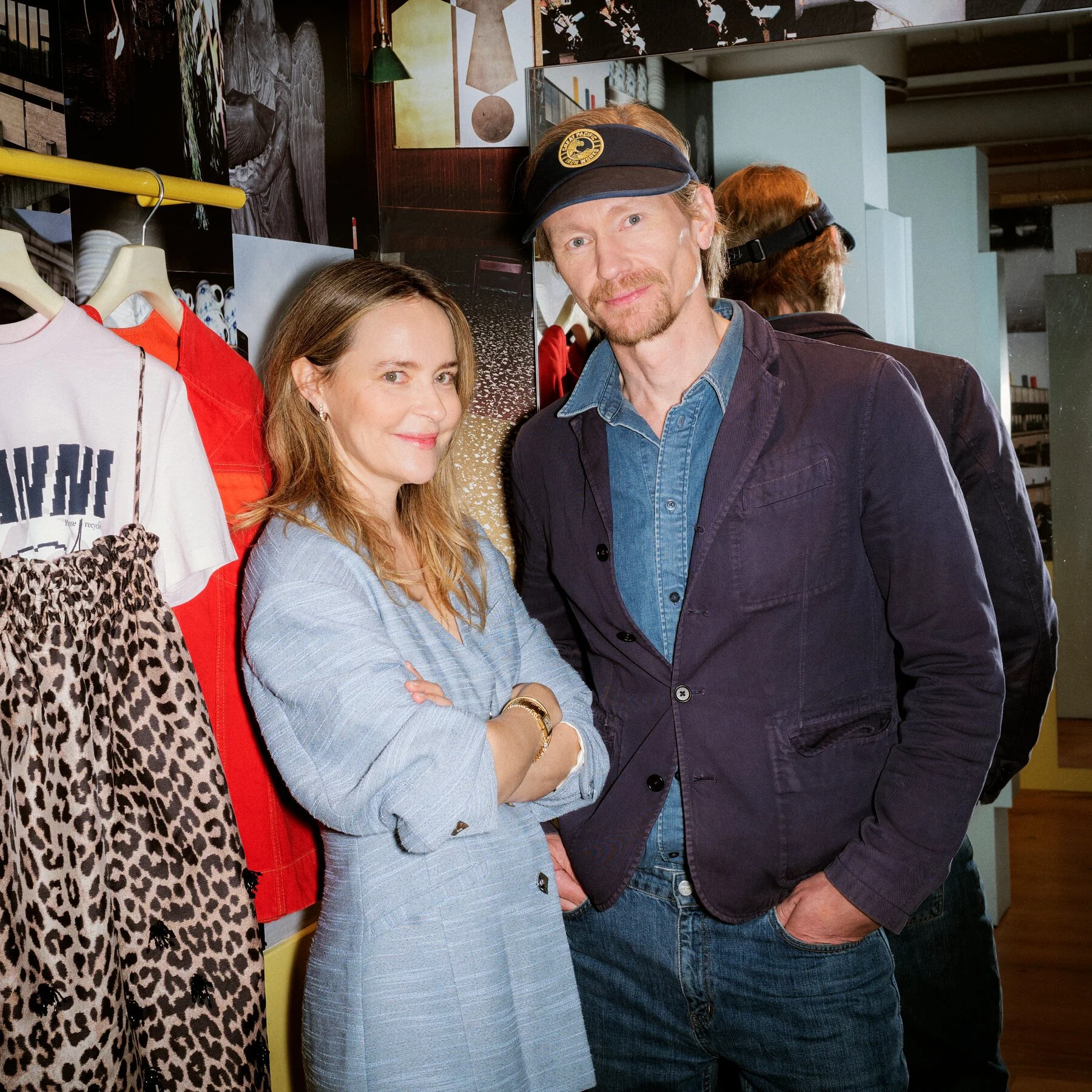
But GANNI, the Copenhagen-based label that has become the unofficial uniform of the "cool girl" worldwide, was built on the opposite. It was built on what co-founder Nicolaj Reffstrup calls a "happy accident".
Before they were industry titans, husband-and-wife duo Nicolaj Reffstrup and Ditte Reffstrup were outsiders. Nicolaj was a tech entrepreneur fed up with the industry, and Ditte was a buyer who felt the Scandinavian fashion scene was missing a pulse.
They didn't have a grand master plan. They didn't have a "big strategy". They just had a feeling that the world didn't need another minimalist boho brand. It needed something with personality.
"We kind of stumbled into it," admits Ditte.
Today, that stumble has turned into a global powerhouse with offices in London, New York, and Copenhagen, and representation in over 600 retailers worldwide.
The GANNI Playbook: Authenticity as a Business Model
The secret to GANNI’s explosion wasn't just the clothes; it was the culture.
While luxury brands were busy being exclusive, GANNI decided to be inclusive. Ditte Reffstrup, the brand’s Creative Director, wanted to design for the way her friends actually dressed: confident, relaxed, and not taking themselves too seriously.
This birthed the #GanniGirl phenomenon.
Unlike competitors who only reposted supermodels, GANNI reposted "real people." If a customer had good energy and looked great in the clothes, they made the grid, even if they only had 400 followers. This created a feedback loop of loyalty that turned customers into a cult-like community.
The lesson? Authenticity scales faster than perfection.
Responsibility is Not a Marketing Slogan
Perhaps the most radical part of the GANNI story is their approach to sustainability. In an industry known for greenwashing, GANNI is brutally honest about the contradictions of fashion.
"We never use the word sustainability," says Nicolaj. "Fashion lives off of newness... and more consumption doesn’t make sense from a planet perspective".
Instead of claiming to be perfect, they claim to be responsible.
They applied for B-Corp certification to level the playing field and force transparency.
They committed to a 100% traceable supply chain and are phasing out virgin animal leather.
They launched The GANNI Playbook, a book that details the messy, difficult trade-offs of trying to build a responsible business in a consumption-driven world.
For Nicolaj, this isn't just about ethics; it's about survival. "I go to work everyday with a little bit of a bad conscience," he admits. That guilt drives their innovation, pushing them to experiment with fabrics made from sequestered carbon and launch rental platforms like GANNI Repeat.
From Tech to Textile: The Co-Founder Dynamic
The magic of GANNI lies in the tension between its two founders.
Ditte (The Heart): She operates on instinct. Her career highlight isn't a specific award, but the feeling of "team spirit and comradeship" in the office. She advises young founders to "Trust your instincts... The traditional route isn’t always the right route".
Nicolaj (The Brain): A former tech entrepreneur, he brings the systems thinking. He quotes Jeff Bezos on being "stubborn on vision but flexible on the details". His role has been to build the infrastructure that allows Ditte's creative chaos to scale globally.
Together, they prove that you don't need to fit the mold to break the mold.
Building the Future
GANNI’s journey from a small cashmere label to a global phenomenon is a masterclass in evolution.
They didn't start with all the answers. They started with a cashmere line in 2000. They pivoted. They rebranded. They experimented.
As they look to the future, their mission remains simple but ambitious: To make quality fashion feel approachable and to prove that a brand can scale without selling its soul.
"We’re the type of people who ask what we can do next," says Ditte. "And we’re definitely not done yet".
MORE FROM OUR BLOg: