
The Architecture of Knowledge Transfer: How 6 Historical Mentorship Models Shape Modern Enterprise Scaling
For chief learning officers, enterprise HR executives, and organizational strategists, the systematic preservation of human capital is the ultimate competitive advantage. Independent of industry sector, companies do not fail because they lack talent; they fail because they lack the structural infrastructure required to transfer mission-critical wisdom from senior executives to emerging leaders.
At WERULE, our agentic AI mentorship software modernizes this exact process—automating matching parameters, tracking cohort engagement, and eliminating manual administrative friction. To fully optimize our matching algorithms, our data teams continuously study the operational origins of structured advisory.
Mentorship is not a contemporary corporate trend; it is an ancient governance mechanism. By deconstructing six foundational mentoring frameworks throughout human history, enterprise builders can glean vital strategic insights into structural succession planning, apprenticeship infrastructure, and cross-disciplinary innovation models.
1. The Homeric Paradigm: The Origin of Operational Governance
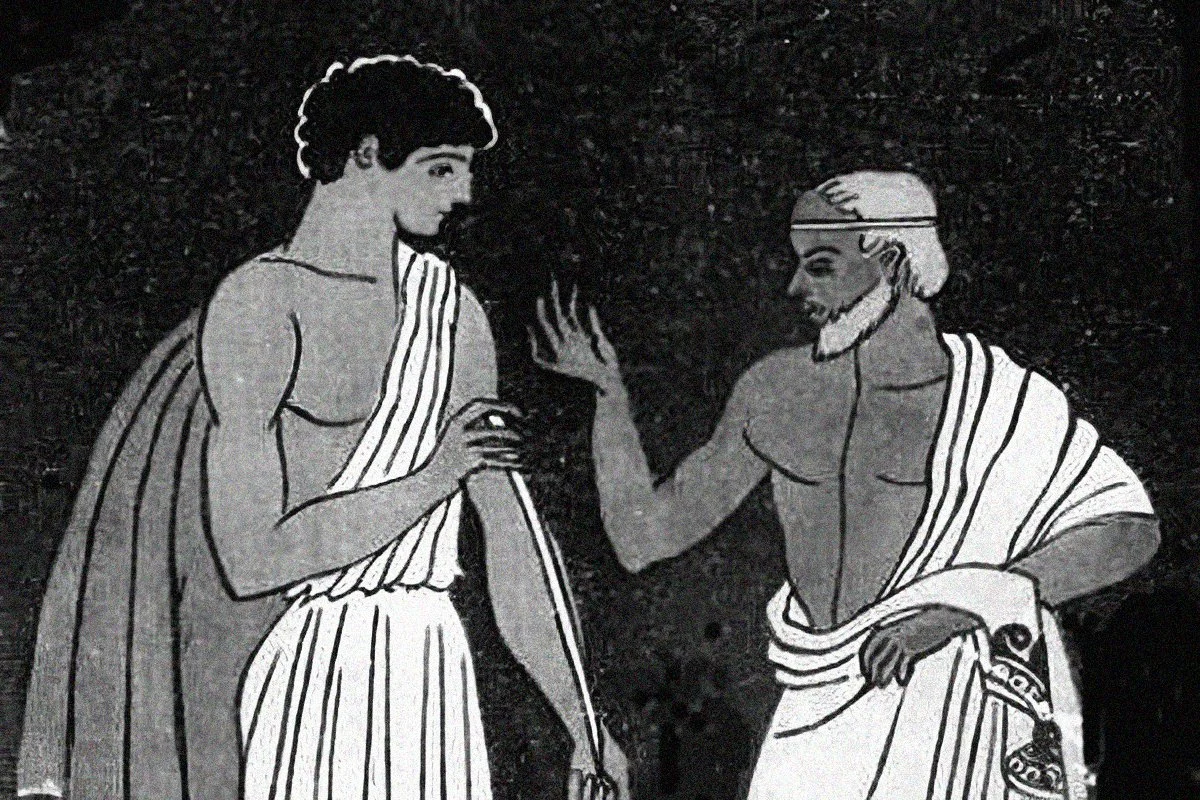
The foundational origin of the word "mentor" is rooted in ancient epic literature. Within Homer’s The Odyssey, when the sovereign leader Odysseus mobilized for prolonged external conflict, he refused to leave his estate's succession to chance. He intentionally entrusted the holistic personal and operational development of his successor, Telemachus, to a trusted elder advisor named Mentor.
This framework demonstrates that true institutional protection requires setting up dedicated, long-term advisor networks to guide emerging leaders through complex organizational transitions.
Enterprise Network Insight
Leaving leadership transitions to chance creates massive operational vulnerabilities. Stop relying on accidental peer connections. Discover how the WERULE platform uses data-driven infrastructure to match emerging leaders with contextual advisors systematically. [Request an Enterprise Demo]
2. Ancient Greece: The Architecture of Political Pipelines
Within the governance models of Ancient Greece, structured advisory was weaponized as a formal tool for statecraft and political pipeline velocity. Iconic statesmen and legendary democratic architects, such as Pericles and Solon, did not achieve executive authority in a vacuum; their development was systematically engineered through close alignment with older, highly experienced statesmen.
This era proves that scaling high-trajectory talent requires intentional, cross-generational alignment where senior institutional knowledge is actively downloaded into the next generation of leaders.
3. Ancient Rome: Matrixed Peer Governance in the Senate
In the administrative matrix of Ancient Rome, mentoring served as a critical mechanism to protect institutional continuity within the political and military systems. The Roman Senate operated as a live, decentralized mentorship incubator. Newly elected senators were not left to navigate complex legislative politics alone; they were structurally paired with veteran senators who provided real-time strategic counsel, behavioral modeling, and organizational navigation tactics.
4. The Biblical Framework: Legacy Realignment and Proactive Succession
Ancient theological records, spanning the collections of Proverbs to the foundational leadership models of the New Testament, continuously highlight advisory as a vehicle for legacy defense. Within these frameworks, multi-generational continuity is treated as a core governance metric.
Whether through structural wise-counsel systems or intensive, cohort-style instructional networks, these historical records demonstrate that sustainable cultural scaling requires leaders to actively pour their experiential data into their surrounding teams.
5. The Middle Ages: Guild Networks and Competency Infrastructure
During the Middle Ages, the concept of knowledge transfer evolved into a strict, highly regulated economic infrastructure. Across the realms of technical science, craftsmanship, and fine arts, specialized trade guilds designed formal master-to-apprentice pipelines.
This framework was built entirely around trackable competency milestones. Masters provided the exact technical, hand-crafted training required to hone a professional's skill set, proving that corporate scaling requires pairing top-tier instructional resources with transparent, verifiable development tracking.
6. The Renaissance: Cross-Disciplinary Innovation Hubs
The explosive cultural and scientific velocity of the Renaissance was fundamentally driven by intensive master-apprentice networks. World-changing disruptors like Leonardo da Vinci, Michelangelo, and Galileo Galilei did not innovate in isolation; they were incubated within highly collaborative, cross-disciplinary studio systems under the direct guidance of master mentors who shared deep historical insights and advanced technical playbooks.
This era serves as historical proof that when an organization structurally connects diverse, multi-disciplinary talent pools, it triggers unprecedented systemic breakthroughs and long-term ecosystem market dominance.
Automate Your Institutional Knowledge Transfer with WERULE
From ancient Homeric literature to the hyper-accelerated studio networks of the Renaissance, the core metric of organizational longevity has remained completely unchanged: your legacy depends on how efficiently you pass down wisdom.
But in the modern enterprise landscape, relying on manual matching sheets or casual, unmeasured check-ins to run your workplace cohorts is an operational risk.
The WERULE agentic AI mentorship software productizes these historical frameworks for the modern workforce. By combining programmatic matching algorithms with real-time behavioral analytics, we equip your People Ops teams to eliminate administrative friction, protect critical institutional knowledge, and scale a high-retention corporate culture across your entire enterprise ecosystem.
Transition from manual spreadsheets to automated talent orchestration. [Schedule Your Platform Walkthrough with WERULE Today]
