
Beyond the Resolutions: A WERULE Report from the UN Women Leaders Network at UNGA
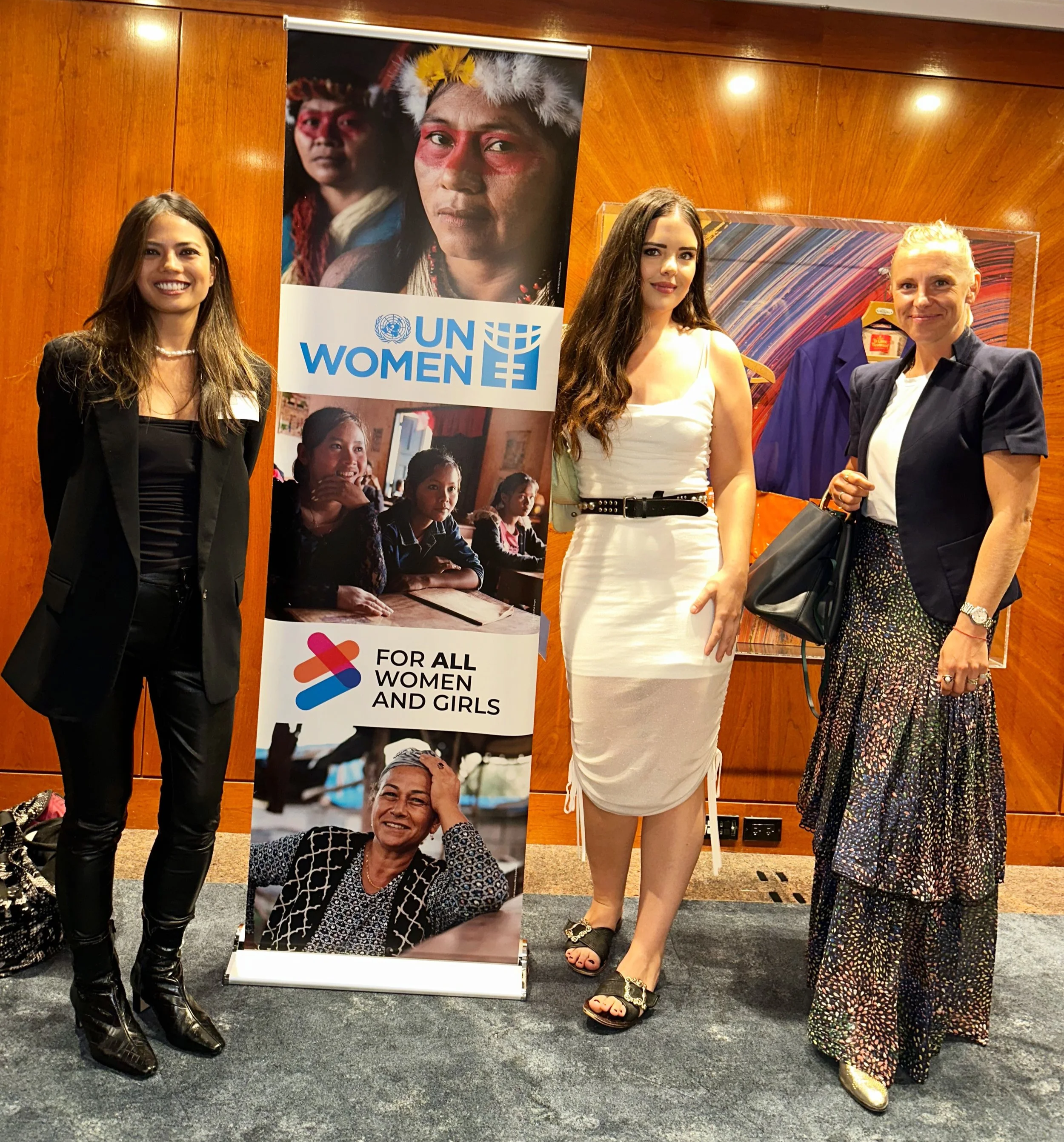
As founders on a mission to make mentorship a right, not a privilege, we spent last week at the United Nations General Assembly. We went to listen, but we left with a fire.
We had the honor of attending the "Women’s Leadership for Peace" event, hosted by the UN Women Leaders Network. The opening remarks from Sima Bahous, the Executive Director of UN Women, set a powerful and urgent tone that defined the entire conversation. She declared that changing the reality for women is not just a goal; it is a mandate, a mission, and a moral imperative. She spoke of the critical need to drive accountability, action, and investment to close the immense gap between promises and progress.
What followed was not a polite, diplomatic discussion. It was a raw and unfiltered assessment of a world where rights we thought were secure are being rolled back. It was a call to arms from some of the most powerful women in the world, including former Prime Minister Helen Clark. This is our dispatch on the uncomfortable truths we heard and the unapologetic new agenda they demand.
Truth #1: Progress is Not Guaranteed; It Must Be Defended
A sobering theme emerged early on, voiced powerfully by the youth delegate from Iceland. She noted that we are witnessing a growing global backlash against gender equality. Progress that took decades to achieve is being undone in a shockingly short time. In a world with increasing conflict, women are the most affected, yet they are too often left out of the peace efforts designed to protect them.
The panel agreed that UN Security Council Resolution 1325, the landmark document calling for women's participation in peace efforts, is more critical than ever. The message is that true security is not just about weapons and borders; it is about inclusion, justice, and sustainable peace—and women's leadership is not optional, but essential to achieving it.
Truth #2: A Woman in Power is Not Enough; We Need a "Woman's Agenda"
In one of the most sophisticated critiques of the day, Hibaaq Osman, CEO of Karama, challenged the simplistic idea that simply electing more women is the answer.
She shared that she has met women leaders who were worse than the men because they did not have a "woman's agenda." She argued that if a female leader does not come from a place of deep commitment to feminist movements and principles, she will not be good enough for the cause.
The Mentor Takeaway: This is a profound lesson for anyone invested in female leadership. Our goal cannot be mere token representation. It must be to elevate and champion leaders—of any gender—who have a proven, unwavering commitment to an agenda of equality, justice, and human rights. It challenges us to look beyond identity and focus on ideology and action.
Truth #3: Economic Power is the Most Significant Element of Freedom
When the conversation turned to solutions, the focus was sharp and clear: to support women, especially in post-conflict recovery, you must give them tangible, economic power. Former Prime Minister Helen Clark was unequivocal, stating that women need livelihoods, micro-loans, training, and capacity.
Another speaker, Susana Malcorra, Co-Founder of GWL Voices, drove this point home, declaring that economic empowerment is the "most significant element of freedom." She argued that the only way women can truly stand up and lead is if they have secured their own resources.
The Mentor Takeaway: For any founder or leader, this is a critical insight. Mentorship and advice are essential, but they must be paired with a relentless focus on creating pathways to capital, revenue, and true economic independence for other women.
The Path Forward: A New, Unapologetic Playbook
The event did not dwell on despair. It pivoted to a clear and demanding set of actions required to move forward.
Humanize the Conversation: The panel stressed the need to connect high-level policy with the "reality on the ground." This means telling the human stories, like that of the Sudanese refugee who fled to a camp in Chad for one reason: to secure a school for her daughters. These stories, as one speaker noted, are often "lost in translation" in senior discussions.
Make Men Accountable Allies: The speakers acknowledged the need to engage men, not as saviors, but as accountable partners who currently hold power. The approach must be strategic, framed as an "economic conversation," not an emotional one. Empowering women is a sound investment with a clear return.
Build from the Ground Up: It was noted that women at the local level have already taken the agenda and run with it, with no money and no political support. They have "feminized, humanized, and localized" peace-building. The key is to connect this powerful grassroots work with the resources and political will at the highest levels.
Our Work Has Just Begun
Leaving the UN, we were left with a resounding sense of urgency. The final message was clear: "our work is hardly begun... we've got to accelerate." Our work at WERULE—to empower female founders and build a global ecosystem of mentorship—is not just about business. It is our direct response to this global call to action. By helping women build economic power, a platform for their voices, and a network of support, we are contributing to the foundation of a more just, peaceful, and equitable world.
Frequently Asked Questions
What is UN Security Council Resolution 1325?
UNSCR 1325 is a landmark resolution adopted in 2000 that acknowledges the disproportionate impact of war on women and calls for their full and equal participation in all peace-building and security efforts.
Why is economic empowerment crucial for women in peace-building?
As several speakers highlighted, economic independence is the most significant element of freedom for women. It provides them with the resources to support themselves, the agency to leave abusive situations, and the power to participate fully in the rebuilding of their communities.
What were the key themes of the UN Women Leaders for Peace event?
The key themes were the urgent need to move from conversation to action in the face of a global backlash against gender equality, the necessity of electing leaders with a true "woman's agenda," and the critical importance of economic empowerment as the foundation for women's leadership.
