
A Crack in the Ceiling: Why Mira Murati's $2 Billion Round is a Beacon of Hope for Founders Everywhere
Every female founder knows the feeling. You walk into a pitch meeting with a world-changing idea, a flawless deck, and a fire in your belly. You present with passion and precision. And then you get the "no." It’s a polite no, often wrapped in vague feedback about the market being "tough right now" or a desire to "see more traction." But underneath, it feels personal. It feels like a verdict not just on your business, but on your ambition.
You read the statistics—the ones that show that all-female founding teams still receive a paltry 2% of all venture capital funding—and a sense of Sisyphean exhaustion can set in. For years, the story has been the same: a system built by men, for men, that struggles to see the value in ventures led by women.
And then, a headline breaks that is so monumental, so reality-distorting, that it forces a collective gasp across the entire industry.
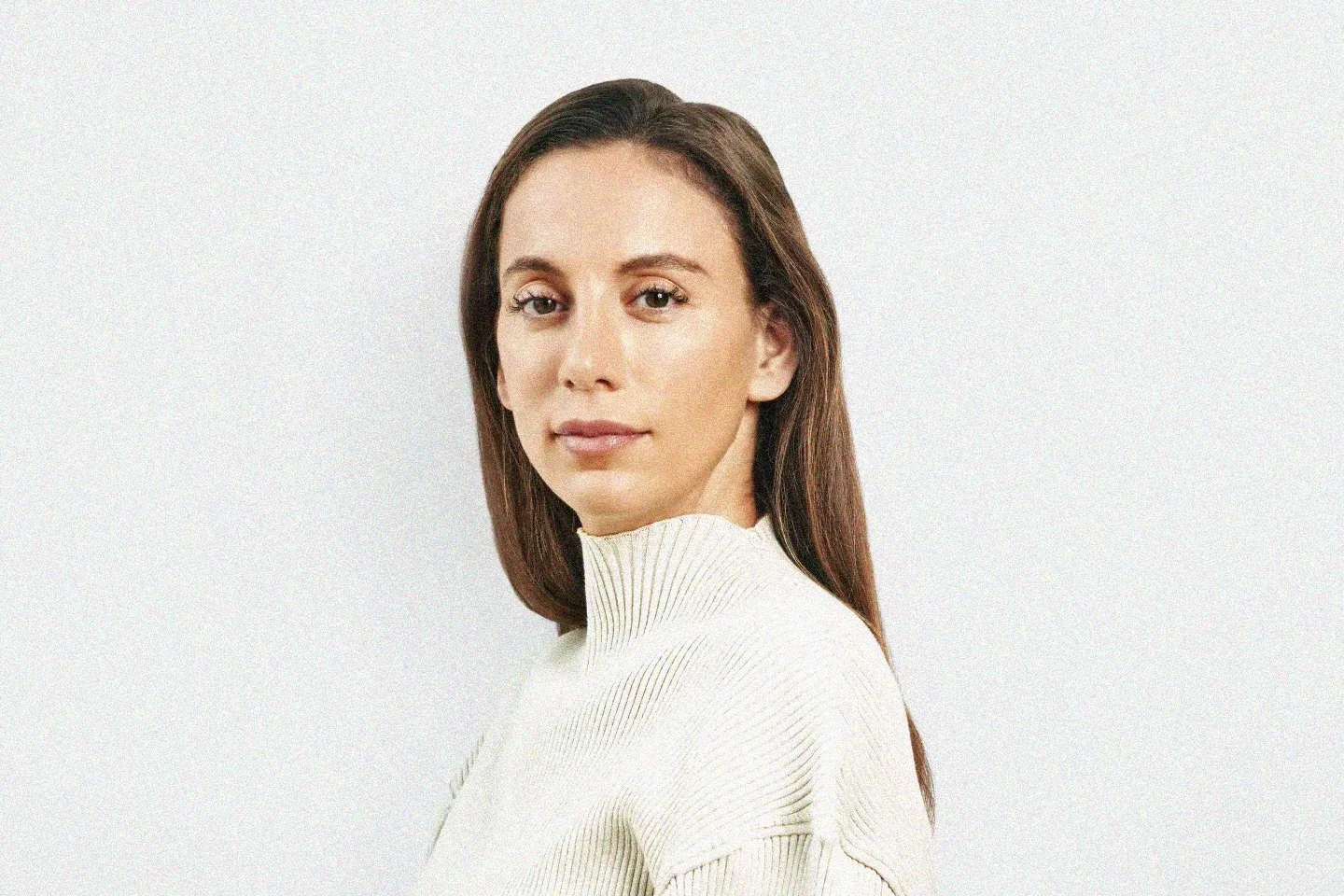
Mira Murati, the visionary former CTO of OpenAI, has raised a $2 billion seed round for her new startup.
Let's say that again. Two. Billion. Dollars. In a seed round. It is a number so audacious it feels like a typo. But it's not. It's a crack in the glass ceiling so large that it might just shatter the whole thing. This isn't just a funding announcement; it's a beacon of hope, a paradigm shift, and a profound message to every woman who has ever been told "no."
More Than Money: Deconstructing the "Murati Moment"
To understand the sheer magnitude of this event, we have to look past the number and analyze the symbolism. This isn't just about one woman succeeding; it's about what her success represents and the new doors it opens for everyone else.
It's a Monumental Win for the Female Technical Founder
For too long, the few success stories of funded female founders have been concentrated in consumer-facing industries like e-commerce and beauty. While these are incredible achievements, it has inadvertently created a "lane" for women. Mira Murati's background is different. She is a world-class engineer, a product visionary who built some of the most complex and powerful AI in history. Her success sends an undeniable signal to the venture world: the next trillion-dollar company might just be built by a woman in a lab coat, not just a lifestyle guru. It validates deep technical expertise as a primary path to power and forces investors to take female-led deep tech and AI companies more seriously than ever before.
It's Permission to Think on a Planetary Scale
A $2 billion seed round is not for a company that wants to incrementally improve a market. It is a bet on a vision to fundamentally reshape the future. This move gives millions of women founders the permission to think bigger. It challenges the instinct to ask for a "safe" amount of capital, to present a "realistic" plan. It encourages us to stop thinking about building a business and start thinking about building an empire. The "Murati Moment" is a direct challenge to the self-limiting beliefs that so many of us have internalized after years of being underestimated.
The Silicon Valley Paradox: Why We Can't Give Up on the System
It is easy—and often justified—to be cynical about Silicon Valley. We can look at the dismal funding statistics, the "bro culture," and the systemic biases and decide that the game is rigged and not worth playing. It's tempting to want to build our own, separate ecosystem.
But here is the unconventional truth: a $2 billion seed round can only happen in a place like Silicon Valley.
It is the only place in the world with such a massive concentration of capital, a high-risk appetite, and a network of investors capable of making such an audacious bet. To abandon the system entirely is to walk away from the largest pools of capital on the planet.
So, we must not give up on Silicon Valley. We must infiltrate it. Mira Murati’s success is a Trojan horse. She didn't just get a check; she got a seat at the most powerful table in the world. Her success creates a ripple effect, forcing the system to evolve from within. The goal isn't to retreat; it's to get more women inside the gates—as founders, as venture partners, and as Limited Partners (LPs)—until the system looks like us.
Our Collective Responsibility: Turning One Woman's Win into a Movement
This moment of hope can either be a fleeting headline or the start of a real movement. The choice is ours, and it depends on what we do next. It requires us to do the one thing that will accelerate change faster than anything else: we need to cheer each other on, louder and more strategically than ever before.
Amplify the Wins, Loudly and Proudly
When a woman founder has a win—any win, from a first hire to a major funding round—it is our collective responsibility to amplify it. Share it on LinkedIn. Talk about it in your meetings. The more we normalize the sight of women succeeding at the highest levels, the harder it becomes for investors to pattern-match their way back to the status quo. We must become the storytellers of our own success.
Formalize Sponsorship and Mentorship
This moment proves the immense power of sponsorship—the act of actively using your influence to open doors for others. It’s not enough to just give advice. The women who have "made it" must now actively champion the next generation. This means making the introductions, advocating for them in rooms they aren't in yet, and putting their own reputation on the line. It's time to move from informal mentorship to a formal, ecosystem-wide commitment to sponsorship.
Build Your "Giving Circle"
Every female founder should be part of a "Giving Circle"—a small, trusted peer group of 3-5 other founders. This is your personal board of directors, but with one key rule: you must be as committed to their success as you are to your own. In these groups, you don't just share war stories; you actively share investor contact lists, you critique each other's pitch decks, and you celebrate every small victory. This is how we build our own network, our own safety net, and our own power base.
A New Narrative
Mira Murati’s historic achievement will not, on its own, close the funding gap that is projected to take another 132 yearsto close. But that's not the point. The point is that it creates a crack in the ceiling. It provides a sliver of light that can inspire millions of others to keep building, keep pitching, and keep pushing.
It reminds us that what was once considered impossible is, in fact, achievable. It gives us a new story to tell ourselves, and our daughters. And sometimes, a new story is all it takes to change the world.
Frequently Asked Questions
Who is Mira Murati?
Mira Murati is a world-renowned engineer and technology leader, best known for her role as the Chief Technology Officer (CTO) of OpenAI, where she was instrumental in the development of groundbreaking AI like ChatGPT and DALL-E.
What is the current funding gap for female founders?
Despite some progress, the venture capital funding gap remains vast. Historically, all-female founding teams have received only around 2-3% of all VC funding in the United States.
How can female founders better support each other?
Founders can create a powerful support ecosystem by amplifying each other's successes publicly, formalizing sponsorship relationships where senior women champion junior talent, and forming small, trusted peer mentorship groups (or "Giving Circles") to share resources and advice.
