
Collective Genius and the Creative Blueprint of Maria Grazia Chiuri
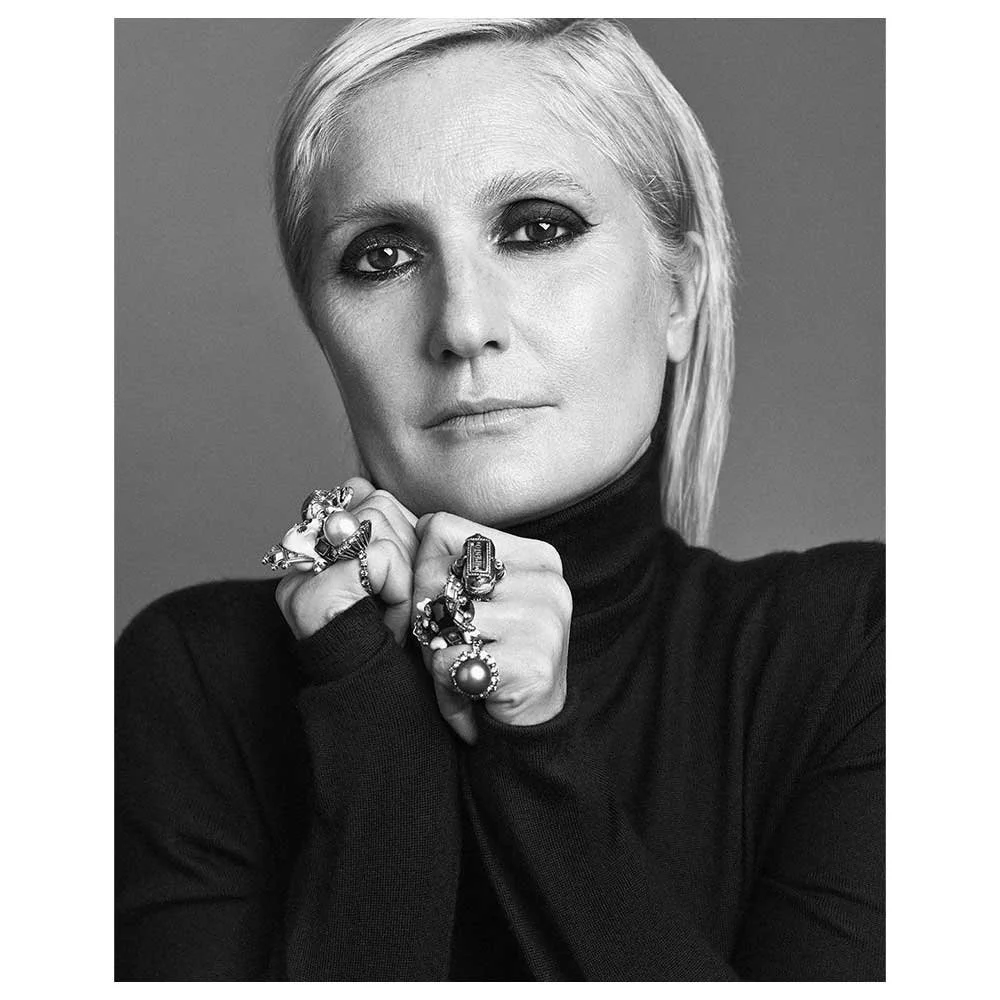
In the theater of global design, we have long been conditioned to worship the myth of the solitary creator. Our culture loves the narrative of the isolated virtuoso, the singular figure who retreats into a private studio and emerges with a finished masterpiece that alters the cultural landscape. But if you look closely at the modern machinery of style and influence, a far more compelling truth becomes clear. The most enduring empires are never built in isolation. They are engineered through the deliberate cultivation of collective power.
Nowhere is this reality more evident than in the career of Maria Grazia Chiuri. Recently named Chief Creative Officer of Fendi, marking a historic homecoming to the Roman house where she began her journey in 1989, Chiuri used her highly anticipated Autumn/Winter 2026 debut in Milan to send a clear message to the industry. Spelled out across the runway in bold, geometric block letters was a simple, transformative mantra: Meno io, più noi. Less I, more us.
It was a striking rejection of corporate ego, and a profound masterclass in leadership for anyone looking to scale an enterprise, navigate a career, or build a legacy in the modern economy. By treating creative direction not as a solo performance but as a shared professional network, Chiuri has created a blueprint for how true human connection can dismantle traditional industry barriers.
The Myth of the Lone Executive
To understand how Chiuri expanded the commercial footprint of Christian Dior from 2.2 billion euros to over 9.5 billion euros during her near-decade at the helm, one must analyze her approach to organizational architecture. Before her historic run in Paris, Chiuri spent years refining her craft within collaborative duos and family-led environments. She watched her mother, a Roman dressmaker, build an independent boutique from the ground up through sheer, resilient craftsmanship. Later, alongside Pierpaolo Piccioli at Valentino, she co-architected a golden era of couture by treating design as an active, continuous dialogue.
When she arrived at Dior as the first woman to ever lead the historic French house since its founding in 1946, she did not try to impose a rigid, autocratic vision. Instead, she opened the doors of the atelier to the world. She treated the runway as a highly curated custom community platform, inviting contemporary visual artists, writers, and historic global schools of craft into the core design process.
This is the exact point where her philosophy becomes vital for the everyday person. Whether you are launching a startup, managing a corporate division, or designing a creative career, your ultimate constraint is never your lack of raw talent. Your constraint is your access to social capital. Success requires a transition from the transactional to the relational. When you stop viewing your peers as competitors and begin viewing them as co-conspirators, you immediately multiply your operational capacity.
Building Social Capital Across Generations
True mentorship is not a top-down corporate charity initiative; it is a reciprocal loop where knowledge and perspective flow fluidly in both directions. Chiuri has institutionalized this concept within her daily creative practice. She has famously cited her own daughter, Rachele Regini, as her central muse, treating the generational divide not as a source of friction, but as a critical strategic asset.
By integrating multi-generational mentorship into the very foundation of her brand, Chiuri ensures that her work remains deeply resonant with the shifting desires of the real world. She recognizes that a younger generation is asking fundamental, urgent questions about utility, authenticity, and environmental responsibility. Rather than dismissing these queries from an insulated executive tower, she uses them to reframe her output.
This approach was evident on her recent Fendi runway, where she collaborated with the estate of the late multidisciplinary artist Mirella Bentivoglio alongside the contemporary performance artist SAGG Napoli. By bridging the gap between historical legacy and raw, modern expression, Chiuri proved that a brand becomes indestructible when it anchors itself in a diverse, living ecosystem. It is a powerful reminder that if you want your business or your career to stay relevant, you must actively build spaces where distinct voices can gather, challenge the status quo, and elevate one another.
Breaking Down Barriers Through Shared Infrastructure
For the everyday builder, the lesson of Chiuri’s career is that access is something you must actively orchestrate. When she reissued the iconic Dior Saddle Bag or co-created the legendary Fendi Baguette bag, she was not just launching retail merchandise. She was building the functional infrastructure that sustained a global community of artisans and consumers.
We live in an economy that frequently tries to automate the human element out of our daily routines. We are told to optimize our schedules, hide behind digital avatars, and view networking as a mechanical exchange of digital credentials. But Chiuri’s trajectory proves that true, transformative scale only happens when you invest deeply in relationships.
You do not need to be the chief creative officer of an international luxury conglomerate to implement this strategy. You simply need the audacity to build your own table. Start by identifying the gaps in your current industry, reach across generational lines to find advisors who challenge your assumptions, and focus entirely on how your work can serve the collective.
The old systems of gatekeeping and insular leadership are quietly deteriorating under the weight of a changing world. The future belongs entirely to the collaborators, the community builders, and the leaders who understand that we only truly win when we move together. Drop the shield of the solo hustle, lean into the power of the network, and let your collective genius do the speaking for you.
Double-click to edit...
