
Inside the Quiet Tech Revolution Rewriting the Future of Global Public Service
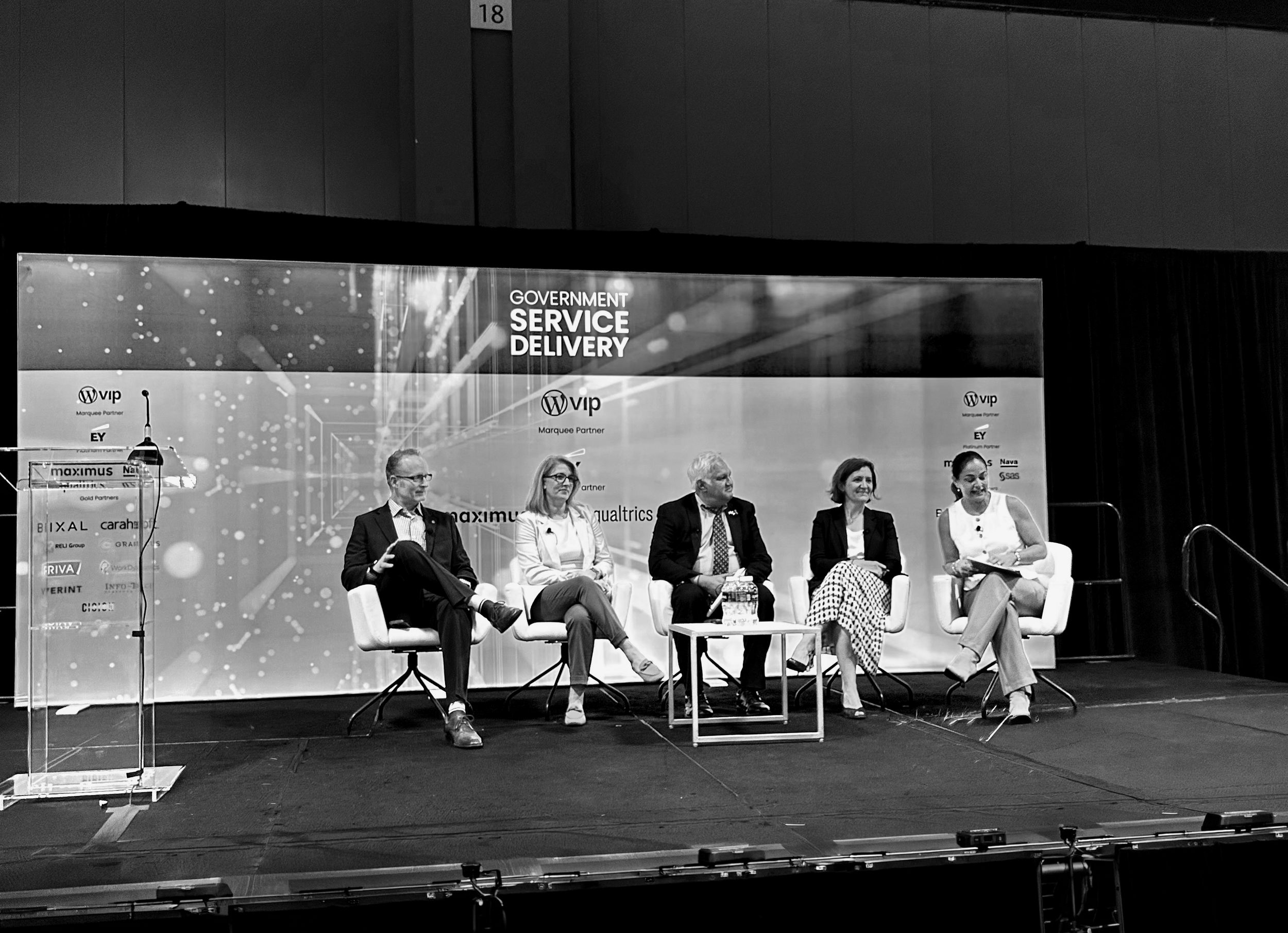
Inside the cavernous Hall A of the Walter E. Washington Convention Center, a profound shift in the architecture of modern power is quietly taking place. To the uninitiated, public sector administration sounds like a labyrinth of paper trails, slow bureaucratics, and tired legacy systems. But step into the Government Service Delivery 2026 summit, and that outdated stereotype instantly evaporates, replaced by an electric, deeply inspiring vitality.
As the co-founders of WERULE, our immersion in this global summit was a powerful validation of the philosophy that drives our own work. The halls were not filled with rigid paper-pushers; they were packed with the world’s most brilliant technology minds. Meeting the trailblazing Chief Information Officers (CIOs) steering the United States federal government and international agencies was a masterclass in what happens when visionary leadership meets civic duty.
From U.S. Federal CIO Gregory Barbaccia and the GSA’s David Shive, to the IRS's Kaschit Pandya and international changemakers from the United Kingdom, Singapore, and Ukraine, the energy was singular. These are the modern architects of statecraft. They are successfully weaponizing artificial intelligence to fundamentally rewrite the social contract between a government and its citizens, liberating human potential rather than erasing it.
The Modern Architects of the Global CIO Network
The most intoxicating part of the summit was discovering the sheer passion and intellectual rigor driving our federal IT infrastructure. When you step into a room with leaders like Brian Epley (CIO, Department of Commerce), Shantrell Collier (CIO, Department of Justice), and Pavan Pidugu (CDIO, Department of Transportation), you quickly realize that the public sector is currently the most exciting tech incubator on earth.
These executives are not merely managing systems; they are reclaiming human time at a staggering scale.
Eradicating the Administrative Grind: The U.S. General Services Administration (GSA) revealed that by loading centuries of public records and building data into secure, isolated AI environments, they didn't just automate tasks—they reclaimed over 400,000 hours of manual labor. That is precious time handed back to real people to solve complex human problems.
Collapsing Time Dynamics: Across multiple federal workflows, automated document processing has collapsed traditional eight-hour manual review windows into a mere 15 minutes—a staggering 85% increase in operational velocity.
The Global Brain Trust: Hearing panels featuring Stewart Hamilton (UK Government Commercial Agency) and Gulsanna Mamediieva (Ukraine) proved that this is a borderless coalition. Every nation is navigating the same structural hurdles, and the absolute generosity in sharing technical blueprints across geopolitical lines was nothing short of profound.
The Crucial Scarcity of Trust Transparency and Synthetic Fraud
As machine learning integrates deeper into the mechanics of daily governance, it faces a critical, non-negotiable barrier: institutional trust. The summit made it clear that we can no longer afford to treat AI as a mysterious, unaccountable black box.
The United Kingdom delegation detailed a massive stride forward with their new Algorithmic Transparency Records, requiring public entities to map out exactly when and how machine learning models are influencing public choices. It is a philosophy that mirrors our exact mission at WERULE. Technology must always serve as a transparent bridge for human connection and relational capital, never a wall to hide behind.
But the most high-stakes, sophisticated conversations centered on global security. Today’s public sector leaders are locked in a relentless, real-time war against highly organized, AI-driven fraud. International bad actors are utilizing generative tech to manufacture deepfake documents, bypass biometrics, and build synthetic identities in seconds.
To fight back, federal task forces are deploying advanced algorithmic pattern-matching to catch the microscopic, hyper-dimensional "digital fingerprints" left behind by synthetic media. It is an inspiring, high-tech chess match, and our global CIOs are proving that the human mind still holds the definitive upper hand.
From the Federal Center to the Local Vanguard with the New York State Pilot
Listening to these global titans navigate the complexities of massive data states completely validated our roadmap. The core challenge of modern leadership—whether you are managing a federal department or building an elite professional network—is engineering social capital through secure, intuitive digital spaces.
This is exactly why we are so fired up about our upcoming New York State pilot.
By launching bespoke, white-label community platforms locally, we are taking the high-level infrastructure principles discussed at the Walter E. Washington Convention Center and bringing them directly to the local vanguard. We are building the custom community software and mentorship app frameworks that allow rising professionals, creatives, and local leaders to bypass traditional gatekeepers, protect data integrity, and seamlessly share knowledge across the state.
The Insubstitutable Human Premium in an Automated Era
The definitive takeaway from Government Service Delivery 2026 is that the future does not belong to the most optimized machine. It belongs to the individuals brave enough to use technology to amplify humanity.
To see our federal government staffed by people who wake up every day hungry to innovate, protect, and serve is a beautiful reminder of what is possible when we pool our collective genius. The machines will continue to automate the mundane, but the volatile, brilliant spark of curation and community will always remain fiercely ours.
We are leaving Washington, D.C. with full notebooks, a global network of extraordinary co-conspirators, and an unshakeable belief that the future of service has never looked brighter. It is time to build.
