
The Enduring Gaze of Annie Leibovitz: Documenting the Evolution of Modern Womanhood
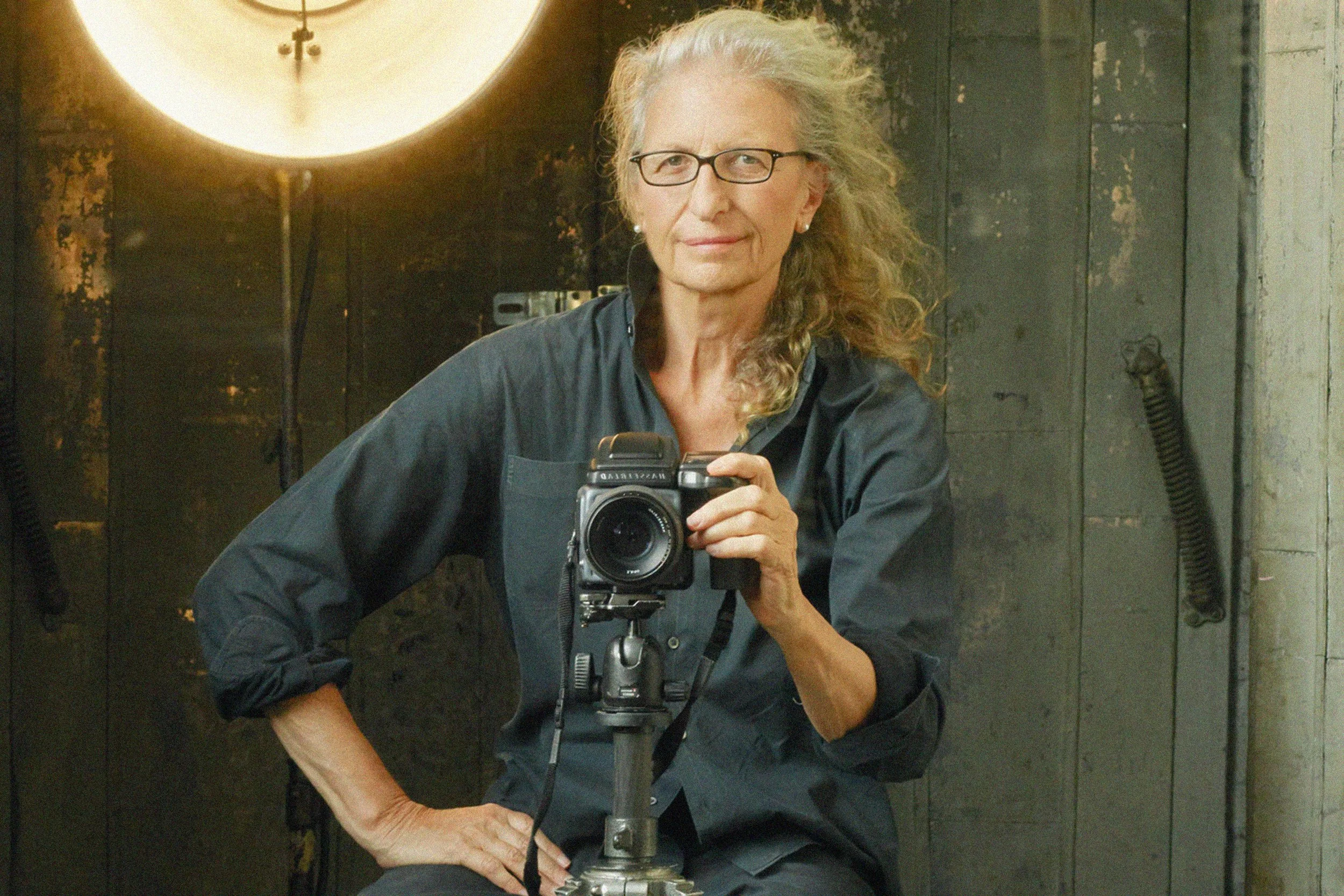
In 1988, a meeting between photographer Annie Leibovitz and cultural critic Susan Sontag set the stage for one of the most profound visual explorations of the late twentieth century. Leibovitz had arrived to photograph Sontag for a book release, but the encounter sparked a fifteen year partnership that would eventually birth the seminal 1999 portrait collection simply titled "Women." In her original introduction to the book, Sontag famously observed that a collection of photographs of women naturally raises the question of women. She noted that unlike men, women are still treated as a work in progress.
Today, that work in progress takes center stage once again. The question of what it means to be a woman is vastly complex, yet it remains as urgent in 2026 as it was decades ago. This ongoing dialogue is beautifully captured in a newly expanded two volume edition of "Women," published by Phaidon. The collection bridges the original 1999 masterpiece with a sweeping retrospective of new photographs taken over the last three decades. Featuring fresh essays by feminist icon Gloria Steinem and celebrated author Chimamanda Ngozi Adichie, the new edition serves as a definitive visual record of progress, vulnerability, and sovereign power.
The Power of the Female Lens in the Studio
To understand the legacy of Annie Leibovitz is to understand a massive shift in the cultural center of gravity. For over fifty years, her distinctive portraits have defined the covers of Vanity Fair, Vogue, and Rolling Stone. But beyond the glossy editorial spreads lies a deep, unwavering commitment to documenting the nuanced realities of female existence.
As Gloria Steinem observes in her essay for the new collection, the 1970s was a time when women were occasionally accepted as street photographers but were rarely granted the authority of the studio. The studio required complex lighting arrays, production crews, and significant financial backing. These were resources that were largely gatekept by male executives and editors. Leibovitz broke through this barrier with unprecedented force and undeniable talent. She did not merely photograph women; she elevated them to the status of monumental cultural figures.
Her attention conferred a unique legitimacy on her subjects. From coal miners in Alabama to Supreme Court Justices in Washington, her lens democratized significance. The new Phaidon edition highlights this expansive vision by featuring figures like poet Amanda Gorman, literary giant Toni Morrison, television pioneer Shonda Rhimes, and Olympic swimmer Katie Ledecky. Each portrait strips away the traditional, flattening demands of performative virtue. Instead, as Chimamanda Ngozi Adichie eloquently notes, these images set our imaginations free, allowing us to witness the exquisite heroism of everyday life.
A Masterclass in Silent Mentorship
Leibovitz’s career is not just a study in photography; it is a masterclass in visual mentorship. Representation is the very first step toward equity. By photographing Sarah Zorn, the first female regimental commander at The Citadel military college, or Eileen Collins at the Johnson Space Center, Leibovitz provides the next generation with a visual vocabulary for their own ambition.
This is the essence of silent mentorship. When young women see themselves reflected not as decorative objects but as sovereign subjects, the boundaries of their potential fundamentally shift. Leibovitz proved to an entire generation of aspiring female creatives that women could command the studio, direct the narrative, and define the historical record. She paved the way for the female gaze to become a standardized, respected framework in commercial and fine art photography.
A Global Stage for a Living Legend
The release of this landmark slipcased edition coincides with another monumental celebration of her life and cultural impact. In northern Spain, the Marta Ortega Pérez (MOP) Foundation recently launched "Wonderland," a sweeping retrospective marking Leibovitz's first major museum exhibition in the country. Housed in a breathtakingly converted industrial space in A Coruña, the showcase explores the vast, genre defining portfolio of her career.
The exhibition and the new publication operate in perfect harmony. They remind the global public that Leibovitz is not just a celebrity photographer. She is a dedicated documentarian of the human condition. Her portraits of older women, in particular, resonate with a quiet grandeur that challenges society's obsession with youth, proving that true influence only deepens with time.
The Unfinished Mission of Feminism
Despite the undeniable strides made in economic and political spheres, the ultimate goal of feminism remains unfulfilled. As Adichie writes in her accompanying text, the movement will only be truly successful when it renders itself redundant. We are not there yet. Women still face systemic underrepresentation in fields ranging from physics to urban design, and the fight for bodily autonomy and equal pay remains a global struggle.
This is precisely why Leibovitz's ongoing documentation is so vital. Her photographs are a testament to what has been achieved and a roadmap for what is still required. She captures the duality of the female experience, holding space for both profound struggle and triumphant accomplishment. Her work reminds us that while the landscape of womanhood is constantly evolving, the necessity of being seen on one's own terms is eternal.
In an era saturated with fleeting digital imagery and artificial generation, Annie Leibovitz offers permanence. She proves that a photograph can be more than a simple record of a moment. It can be a catalyst for cultural transformation. By relentlessly raising the question of women, she ensures that the answer will be written, and photographed, by women themselves.
