
The Brutal Reality of Building a Brand @ PArsons | Lessons from New York’s Fashion Vanguard
There is a deeply romanticized mythology surrounding the New York fashion designer. The cultural imagination pictures a solitary genius sketching in a sunlit SoHo loft, discovering overnight fame, and effortlessly dressing the cultural elite. But the actual architecture of an independent fashion label is far less glamorous and infinitely more grueling. It is built on 5:00 AM emails, supply chain logistics, and an unwavering, almost irrational dedication to a singular vision.
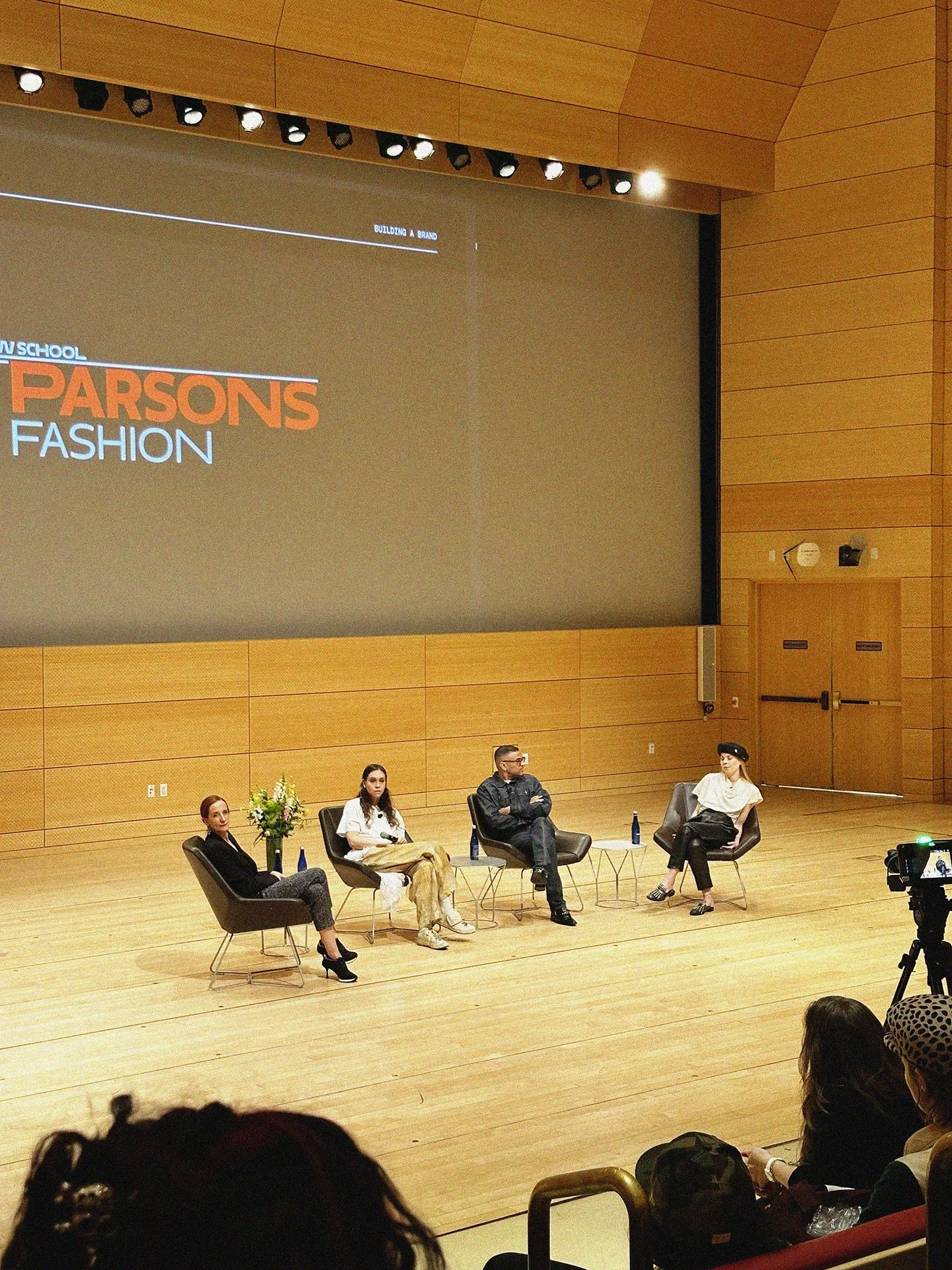
Recently, WERULE founders Camille Jalandoni and Justyna Kedra attended a masterclass in this exact reality. Moderated by Vanessa Friedman, the Fashion Director and Chief Fashion Critic at The New York Times, the panel featured three of the city’s most formidable independent designers: Hillary Taymour of Collina Strada, Raul Lopez of Luar, and Gigi Burris O'Hara of Gigi Burris Millinery.
What unfolded was not a standard industry victory lap. It was a fiercely honest, deeply analytical conversation about the grit required to survive the modern fashion ecosystem. For emerging founders, creatives, and entrepreneurs in any sector, their shared experiences offer a flawless blueprint for navigating the volatile intersection of art and commerce.
The Myth of the Overnight Prodigy
The most dangerous illusion in the modern creative economy is the expectation of immediate acceleration. Fueled by social media, young creatives often graduate expecting to launch massive brands before they fully understand how a hem is constructed or a payroll is met.
Raul Lopez, whose brand Luar has become the defining pulse of Brooklyn's underground-meets-luxury aesthetic, quickly dismantled this narrative. He noted that the most critical phase of a designer's career is the era spent completely out of the spotlight.
"Everybody you admire, everybody you reference, everybody you looked at, was an assistant for at least ten years," Lopez stated, cutting through the ego of the modern startup culture. "It’s a working process. Stop thinking that you have to leave school and automatically become this person... You have to drop your ego. Sometimes I even say I am the intern. You have to be willing to do the work."
This period of institutional learning is non-negotiable. Lopez, heavily influenced by the relentless hustle of his Dominican parents in New York, spent years absorbing the operational realities of the industry before Luar reached its current stratosphere. True mastery requires studying the failures and successes of established systems before attempting to build your own.
Protecting Your Vision and Trusting Your Gut
When an independent brand begins to gain traction, the industry will inevitably try to mold it into a more digestible, highly commercialized package. This is the exact moment a founder must learn to violently protect their sovereignty.
Hillary Taymour has built Collina Strada into a globally recognized champion of sustainable, wildly expressive fashion. Yet, she openly shared that her biggest business mistake was ignoring her own intuition in favor of traditional industry prestige. Early in her career, she aligned with a top-tier wholesale showroom simply because they were considered "the best" in the business.
"I knew I should have left my wholesale showroom well before I did," Taymour confessed. "They drove my business into the ground and I did not listen to my gut because I was told, 'Why would you leave them?' I didn't trust myself. I trusted what the world in this industry had deemed better."
The lesson here is profound for any entrepreneur. Aligning with prestigious partners who do not fundamentally understand your core demographic is a liability, not an asset. Taymour eventually realized that the traditional wholesale model—with its punishing minimum order quantities and delayed payments—was suffocating her. She pivoted hard into a direct-to-consumer model, allowing her to control her cash flow and speak directly to the Collina Strada community.
The Logistics of Local Agility
While globalization has dictated fashion manufacturing for decades, there is a massive strategic advantage to keeping your production localized. Gigi Burris O'Hara provided a fascinating look at the power of local agility.
Burris started her journey as a student at Parsons, making hats on the side to meet a growing organic demand from stylists and friends. She would literally sell them at nightclubs and hand-deliver pieces in a Smart car. Today, she maintains a rigorous local production model, working closely with a third-generation blocking factory in Brooklyn.
This is not just a romantic nod to New York craftsmanship; it is a highly effective business strategy. "Speed is really energy," Burris explained. "I feel so privileged to make everything here in New York City because we have a real agility and speed to market. If an idea comes in at the final hour, or if we need to react to a sudden demand, we can pivot instantly."
In an era where global supply chains can collapse overnight due to geopolitical shifts or economic downturns, maintaining localized, trusted manufacturing partners allows a brand to remain incredibly resilient.
The Unromantic Rules of Cash Flow
Beneath the runway shows and the celebrity endorsements, the survival of a fashion house relies entirely on financial discipline. The panel offered a masterclass in bootstrapped survival, completely rejecting the Silicon Valley model of taking on massive early investment.
For founders looking to build a lasting enterprise, the designers offered three ironclad rules for financial survival:
Never Touch the Business Account: As Lopez adamantly noted, mingling personal lifestyle expenses with business revenue is the fastest way to bankrupt a young brand. The money your company makes belongs to the company's growth, not your personal wardrobe.
Segment Your Revenue Streams: Taymour explained the necessity of diversifying income. By balancing direct-to-consumer sales, brand collaborations, and select wholesale accounts, a brand creates a safety net. If one sector of the retail economy collapses, the others keep the lights on.
Do Not Design Without a Contract: Taymour shared a devastating story of executing designs for a major footwear collaboration based on verbal promises, only to be presented with an abysmal contract after the work was done. The ultimate rule of creative business? Never execute labor without legal and financial protection.
The Architecture of Endurance
If there is a singular takeaway from the insights of Collina Strada, Luar, and Gigi Burris, it is that a lasting brand is built on an absolute, unyielding obsession with the work itself. You cannot survive the grueling minutiae of HR, payroll, and production delays if you are only in it for the glamour.
As Lopez perfectly summarized, "Business is like a child. You have to nourish it, feed it, give it your all. You can't make a baby grow in a day."
For the founders of WERULE, observing this panel reaffirmed a core belief: sustainable success in any industry requires community, relentless education, and the courage to build on your own terms. Whether you are navigating the complexities of raising capital or trying to scale a creative vision, surrounding yourself with a global mentorship networkis the only way to turn an isolated struggle into an enduring empire.
The New York fashion scene is not for the faint of heart. But for those willing to do the quiet, unglamorous work in the shadows, the runway is always waiting.
Double-click to edit...
