
Crystal Cheatham created a space where those who consume progressive Christian media can find content created by progressive Christians
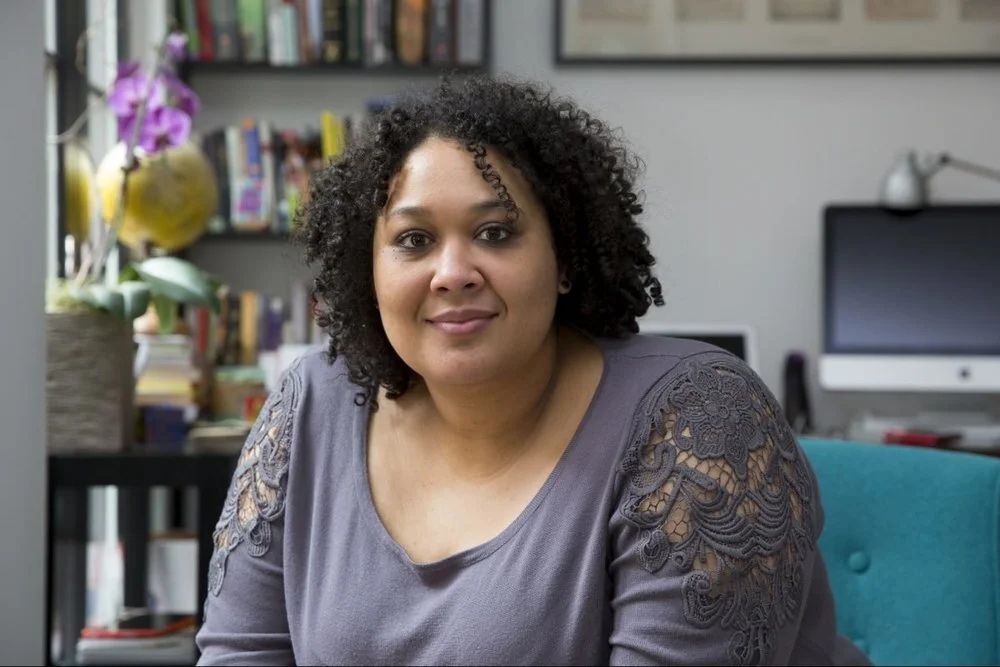
I am an activist turned entrepreneur. I created Our Bible App which means I created a space where those who consume progressive Christian media can find content created by progressive Christians. Until Our Bible app it has been a completely fragmented market. My time is dedicated to creating the business around the app that I developed. I spend most of my day working with my developer on finessing the app itself and with the authors who write devotionals, books and podcasts.
What ignited the spark?
I was raised in a strict Christian home with a lot of love poured on top. When I came out as a lesbian it didn’t stop believing the things I learned as a child. In fact I believed them more and wanted both books and media to support my non-traditional beliefs. As I built community I realized that there truly was a hole in the market where progressive thinkers like myself were unable to find a one stop shop for faith products. Today there is a booming Christian retail market and it is worth over $4.6 billion in anual sales. Many sales are bibles and other traditional products such as books. That’s not to exclude dollars from advertisers. Trends outlined by Barna Group and Pew Research show that the progressive Christian market is at an all time high and still rising. Of the 144 million Christians in America, 88.2 now identify as non-traditional or progressive. These consumers are youthful, tech savvy and often uninterested in institutionalized religion. Our Bible capitalizes on these factors by making the often fragmented progressive Christian market available as a one stop shop. Now users can purchase bibles, books and media from an app accessible on Apple and Android devices
How did you come up with your business idea? What inspired you?
I have always been part activist and part entrepreneur. When I see social problems I can’t help but invent businesses and project to try and fix them. All this to say that Our Bible is not my first rodeo. I have been working to create inclusive faith industry since 2009. I started with a small business called Follow The Red Balloon, which encouraged teens to talk about their faith experience. It was a trumped up T-shirt business. More than anything it was a gateway to the work I would end up doing for the better half of a decade. Eventually that blossomed into another business called The Identity Kit Project. This was a nonprofit setup to create materials for LGBTQ youth in conservative faith spaces. Since then I’ve worked with many groups who try to uplift sexual minorities in faith circles as a contractor or as boots on the ground in actual protests.
What were you doing before this? How did it prepare you for the entrepreneurial life?
My last and more successful business was a private LLC that I created for myself. I’d recently graduated from Antioch University, LA with an MFA in Creative Writing and was determined to make that degree pay for itself. I worked as a ghostwriter cold contacting professionals and pitching them the idea of a book. I’ve written many manuscripts for these authors and helped them self publish or find a traditional publishing house for their work. It was not easy, but for me it was better than working a 9-5 contributing to someone else's wealth. Working for myself as a writer gave me the discipline to be my own boss and set my own hours. I didn’t have a boss so if my work was lackluster I had no one else to blame but myself. I took a lot of responsibility for my actions and failure became a tool I used to leverage those learning moments into some kind of success.
If you were a book, what would your title be and why?
I’m actually pitching a book right now and the title is something like, Where Tech & Spirit Collide. There is a violently beautiful world blossoming behind tech and I’ve lined myself up with a front row seat. I could also say the same exact thing about non-traditional Christianity and I want to represent a space that brings those two things together with a satisfying and resounding cohesively.
Who is the one super successful person you look up to? Why them? Can you share their quote/ideology that inspires you the most?
Right now I am most in love with the journeys of my black, female, millennial counterparts. I’m talking about Phoebe Robinson and Jessica Williams who host Two Dope Queens, a podcast and limited HBO show. I love seeing young women like myself getting the opportunity to showcase their talents and bring audiences together. Lena Waithe is another one whose journey echoes my own. She is a writer who moved to LA to pursue her craft in a space where black women are rarely given the opportunities they deserve. With the support and often financial backing of her mother she was able to hit that one out of the park. I think with these women in the spotlight I can have faith that my journey will have a similar theme of hard work and success. The quote that drives my work is by C.S. Lewis who is a well known Christian author. It’s simple, “Courage, dear heart,” he says. And every day I take up that credo and repeat it to myself as I manage the ups and downs of this new and ever challenging business.
What are some pros and cons of having (OR not having) entrepreneurial parents?
My mother is probably the single most influential person in my life. She was raised on a farm in rural Zambia and through her hard work she gained a scholarship to the US where she became a Nurse Anesthetist. Not only that but she has launched her own line of hair care products and invested in no less than 5 other startups. She is a woman of incredible faith and determination. I can truly say she is one of my best friends and I wouldn’t be who I am or where I am if it weren’t for her.
What is your proudest accomplishment of this year? What are you looking forward the most in the next 12 months?
I am proudest of launching Our Bible in both Android and Apple stores. We launched on January 18th, 2018 and I’m looking forward to seeing this company change the way we experience church. I hope that it has a lasting affect on Christianity and that the word Christian becomes a much more positive thing to be than it is now.