
Wenfren Setzer produces a contemporary range of hand-crafted paper lifestyle accessories @ Wren Design
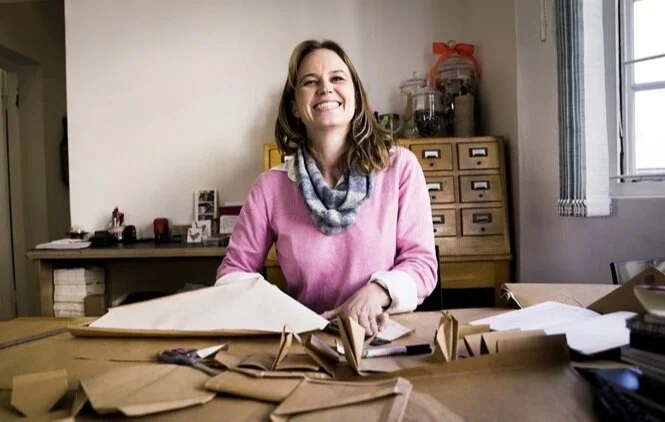
Wren produces a contemporary range of hand-crafted paper lifestyle accessories. Recycled cement bag paper is fused with fabric for strength, and treated to become water resistant without loosing it's tactile honesty. This is an innovation that has been highly successful and which has led to a range of over 100 products that combine simplicity of design with eco-friendly manufacturing methods that is not patent-pending.
What motivated you to become an entrepreneur? Is having your own business something you always wanted?
Planning, strategising, making, finding creative solutions to problems and then doing and making "real" is what drives me. A lifelong purpose is to be an inspiration.
How did you come up with your business idea? What inspired you?
I was driving behind a cement truck and thought that the print on the cement paper bags looked cool. And then buying shoes later that day and learning how the different fabrics are bonded for strength.
Some months later, in a rather fortuitous moment, I fused this fabric to some cement packaging and took it to my sewing machine. It worked, and paper became a sewable material! This is how Wren began.
What were you doing before this? How did it prepare you for the entrepreneurial life?
I originally started in textile design and went into the design industry at first, but didn’t find it challenging or inspiring. I found it quite hard to get a job, and when I did, the job was very 9 to 5, clocking in and clocking out, and not really what I wanted to do with my life. I learnt a lot from this experience and made some great connections that I still rely on today.
What do you think about company culture? What are some of your tips on being a good leader?
We have an interesting set up in the business at Wren. I never wanted to be a factory so we have a small studio where a few of us work (almost working a central hub) and then the "makers" work remotely, from their own selected premises. We do this becuase part of what inspires me in life is building up other people. It probably comes from the fact that everyone is a teacher in my family. So, all the ladies who work for me, and the men, they have all set up their own businesses and they supply me with our bespoke products. Our business represents around 90% of their work, and as a result, we have a trust relationship – they know I depend on them and they in turn depend on me. That is how we have built up our business, and theirs, over the years. It is great because we have created small entrepreneurial hubs both here in South Africa and on the African continent. Our sub-contractors all had the essential craft techniques we needed, we have simply helped them over time to perfect their crafts to a quality that is required for our business and the products we create. It has been a long journey to ensure we have the highest quality and standards of craftsmanship in our products.
Do you have a fixed work routine? Is it important to have one? Any tips for our readers?
No. The only fixed work routine is that I am always working. I try to disconnect from time to time but the bottom line is that I am responsible for the income of others and it is important to me that they have stability in their lives so that they can provide for their families. I love that my day is always varied and never boring. My challenge is to hold it all together and keep the company moving forward.
What do you think is the biggest obstacle for female founders? How can we overcome it?
It is very common that as a female business owner people assume you have a hobby rather than profitable company.
How do you generate new ideas to stay relevant on the market? Is it important to innovate in your space?
It is critical that I innovate. I try to say yes to as many opportunities as possible because you never know what doors they might open. I also try to listen to what customers want and respond to that with product development.
What are your short/long term goals?
A big goal, that might sound silly, is a studio that faces north. Sunshine is good for the soul and productivity. Currently our studio faces south and it is always cold and dark. Five years ago I dreamt about a studio that was not part of my home... trivial dreams but they are most rewarding to achieve.
What sacrifices have you had to make to be a successful entrepreneur?
Im not sure I would regard myself as a successful entrepreneur yet. I am always striving to become that and by definition I would define a successful entrepreneur as being a person who has created a company that can operate without the founder and show a continual and healthy growth pattern.
What are some pros and cons of having (OR not having) entrepreneurial parents?
My parents are teachers and not at all entrepreneurs but they are leaders (my mom is a headmistress and my dad was always a headmaster). They managed teams and that is not very different to managing a company.